It's what happens at the table, not what's in the book
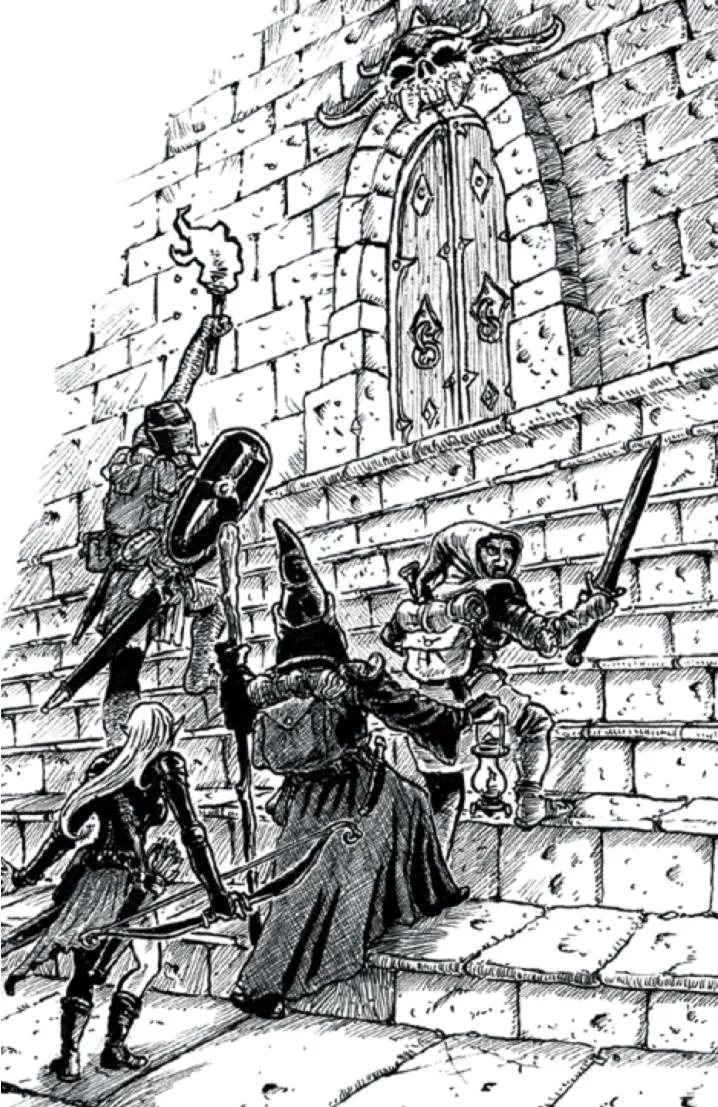
Games are about what you have rules for. This is something I believed for years, usually coupled with an argument that D&D isn't a roleplaying game since nearly all of its rules are about killing monsters and getting treasure and there are very minimal mechanics for roleplaying. After a year of playtesting Omens & Odyssey's, I don't think this is true. Let me explain.
The initial version of Omens & Odysseys was a mess of hacks for the various games our group played for the last 15 years (Dungeon World, Burning Wheel, Torchbearer, Mothership, Mork Borg, OSE) skinned over the core of DCC RPG. I took the above maxim to heart and designed subsystems for skills, equipment, conditions, basically any facet you've seen in a fantasy TTRPG. The groups definitely had fun with the games, but it did seem like the rules were constantly pointing the players towards the mechanics vs. the fiction of the game. Which leads me to the title of this post: it's what happens at the table, not what's in the book.
This, I think, is what makes RPGs so compelling. For a few hours, you and a few friends inhabit a shared fictional space to embody a different persona, overcome challenges, debate decisions (or, in some cases, morality). The rules certainly matter, but only insomuch as they are a tool or a procedure to resolve uncertainty. This is getting close some well-trodden topics like "rulings not rules", the difference between OSR/NSR games and more modern ones, but I'm not particularly interested in rehashing those or joining the chorus of voices on one side or another.
What I am interested in is talking about something that I learned from that year of playtesting that pushed Omens & Odysseys from that mess of hacks to what it is now (something resembling a beta). Sure, games are about what they have rules for, but for RPGs in particular, those rules must point the players and GM back towards the fiction of the game and in some cases that means not having many, or any, rules at all.
I'll use skills as the example. In the initial draft of Omens & Odyssey's, Skills closely resembled 3.5 in terms of their granularity. Players invested ranks. All of this was under the guise of making characters unique from each other and forcing some differentiation. If your character didn't have a skill, there was a subsystem for learning it. The systems worked fine, but it was a lot of book keeping and the nature of skill lists inherently makes players not engage with the fiction of the game.
Now? Skills are trained and untrained. Trained skills add your level and the appropriate Attribute modifier to the roll. Untrained skills roll 1d10 and the appropriate Attribute modifier to the roll. Trained skills are something that fits within your character description. Untrained skills are actions that fall outside of that character description.
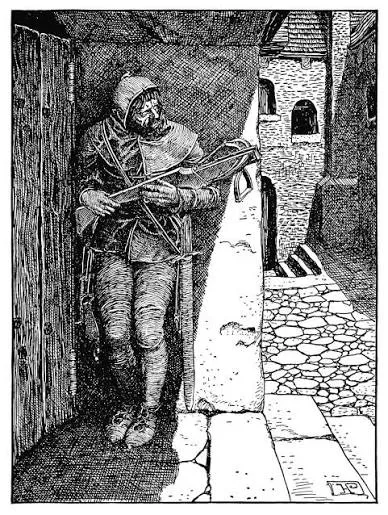
Not only does it force players to engage with the fiction of the game, it also avoids the weird thing that happens in skill lists that leads to duplicitous rolls. Take the Thief in DCC RPG. There is a separate skill for both Hiding in the Shadows and Moving Silently. Both are rolled using a 1d20 + Agility modifier. In the system above, a player need only describe how their character move slowly through the shadows to avoid being seen or heard. Simple, thematic, engages the fiction of the world, and the action is resolved in a single roll.
To take it full circle, the reason D&D has few mechanics for roleplaying is because those things largely happen outside of the rules. They are driven by the players character's personae and the world the GM has created. The collective imagination at each table is the heart of the game and every rule must push the group deeper into that well vs. deeper into the rulebook.